The circle sets no entrance examination. Its door stands open from grade VII, the age at which a mind first learns that a statement can be proved, and not merely checked; but the room within is deep, for everything in it is proved and constructed from first principles. POETIC, the first of the circle’s books, now in preparation as the prequel to MOTIF, proves every result it states from a few foundations declared at the outset, and where it cannot, says so. Selection takes place inside, over years, and weighs not what a pupil already knows but the rate at which they adapt and the endurance they bring to difficulty. Attrition, from the Latin for a rubbing away, is the work of friction: against hard problems, the inessential wears away. What survives is attraction proven: the attachment to discovery and to critical thought that, with Arnold and Marsden, we hold early instruction to fasten, and that the circles of Moscow and Leningrad showed can bring a young mind to maturity before university. What draws a pupil here should be the subject itself; nothing else lasts.
Elementary mathematics from an advanced standpoint.
After Felix Klein, Elementarmathematik vom höheren Standpunkte aus, 1908
Founded in 2020, AMMOC is a research and teaching circle for pre-college mathematicians. It treats the elementary mathematics of the olympiad and the pure mathematics of the university as a single subject, in the tradition of the mathematical circles of Eastern Europe, and asks of its pupils what mathematics asks of everyone: proof.
It is small by design. Seminars meet online in groups of three to nine, and the cohort never exceeds twenty-four pupils.
The five letters
Each letter of the name stands for one of the five commitments on which the circle rests. Together they say what AMMOC is more exactly than any summary could.
Mathematics
The sprint keeps the marathon honest; the marathon keeps the sprint from becoming a bag of tricks.
Mathematics is pursued here at two tempos at once. The sprint is the olympiad problem, in the curriculum of the International Mathematical Olympiad: a closed question, a few hours, and nothing to lean on but ingenuity. The marathon is the undergraduate curriculum, read slowly, where one idea may take a term to understand and a year to use well. Each disciplines the other. They are one subject: the theorem behind an olympiad solution is proved as the university would prove it, and the theory of the university is carried back to the contest problem. Both are taught in the manner that Nikolai Konstantinov devised for the Moscow mathematical schools of the 1960s: a subject is set out as a sequence of definitions and problems, and the pupils, guided through every difficulty, come in the end to prove its theorems themselves. Nothing is taken as obvious, for, as a teacher in those schools used to say, ‘being obvious means easy to prove’. Competitions are kept in their place, as a barometer of how a young mind is thinking and a stage on which ability may be shown, but never as the destination. We teach mathematics as an intellectual art and a necessity of thought; distinctions, when they come, are its by-products.
Mentorship here is apprenticeship in the older sense: a pupil works beside a mathematician until the manner of working becomes their own. The apprenticeship takes in every part of a pupil’s academic life, the choice of university and of subject among them. Its daily form is the one Konstantinov observed in his classes: when a pupil explains a proof to the teacher, and each tries to follow the other’s thinking, there arises ‘an entirely new level of mutual understanding’ between them, which lecturing does not create. Senior pupils follow directed reading drawn from the core and elective courses of research universities in North America, Europe and the former Soviet Union, and write expository theses on what they have read. At the close of their studies each thesis is examined orally, in some twenty to twenty-five meetings, by the director and by mathematicians from outside the circle. What is examined is not a performance but an understanding: whether the pupil can stand behind every line of the thesis, in their own voice. Nor does mentorship stop at what is already known: in the circle’s research seminars the pupils’ questions meet those of current mathematics, as when, in September 2026, a proof that every vector space has a basis led to the question of what that theorem costs. So the circle bridges the rigorous ingenuity of the olympiad and the professional study of theoretical mathematics.
AMMOC works wholly online, and by choice. It was conceived in reflection on a complaint that university mathematicians often make of their entering students, a complaint less about how much they have covered than about how they think. The answer was to hold every pupil, wherever they live, to the standard of proof and of academic vision kept by the best circles of North America and Eastern Europe. Its seminars, of three to nine, have gathered pupils from more than twenty countries on six continents; senior pupils cover the theoretical mathematics of the first three undergraduate years, together with its use in contests. The Eastern European tradition has taught at a distance before: in 1964 Israel Gelfand founded the All-Union Correspondence Mathematical School at Moscow University, from which, by his own count, more than seventy thousand pupils graduated. The circle keeps up such a correspondence at the pace of the seminar itself: every few minutes pupils send photographs of their working, and the director reads each and returns a question or a direction rather than the solution. The medium changes nothing essential: a proof is written, questioned and rewritten, line by line, until it is right. The design reaches beyond the cohort: the circle publishes its courseware for young mathematicians everywhere, whether or not they study in it.
Creation
Ability is not measured here. We create it, and we continually advance it.
Every theorem, problem and definition begins with the pupil’s own attempt. Classical results are rediscovered under guidance before they are read, so that each proof first exists as a question the pupil has asked. Three capacities are formed in this way: the mathematization of thought; ingenuity; and cognitive endurance, the power to remain with a hard problem for days and to return to it after every failure. None of them can be tested into existence. They grow slowly, in close and demanding company, and when they consolidate they bring a particular happiness, and a first, sober apprehension of the scientific life ahead. In time the attempts become contributions of the pupils’ own: a counterexample, found while still at school, to an exercise in a standard text of analysis; original work by pupils printed in Crux Mathematicorum; theses examined by mathematicians from outside the circle.
The circle in figures
From the statement of the circle’s purpose“The circle exists to form young mathematicians. It seeks out pupils in the middle and high-school years, grounds them in proof, and leads the ablest of them, through directed reading and an expository thesis, to the threshold of research.”
One subject
There is no school mathematics and then real mathematics. There is one subject, and if you teach it honestly, the frontier is never far away.
Those who inspire us
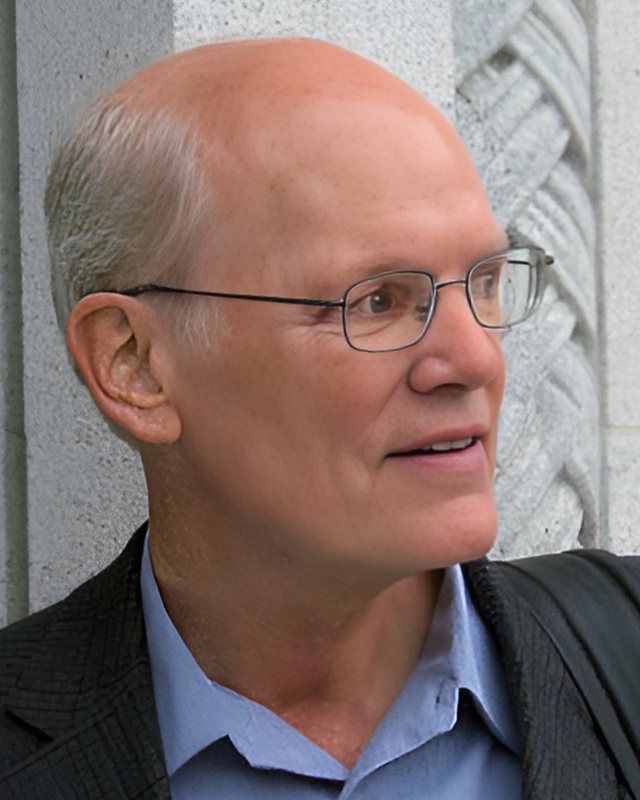
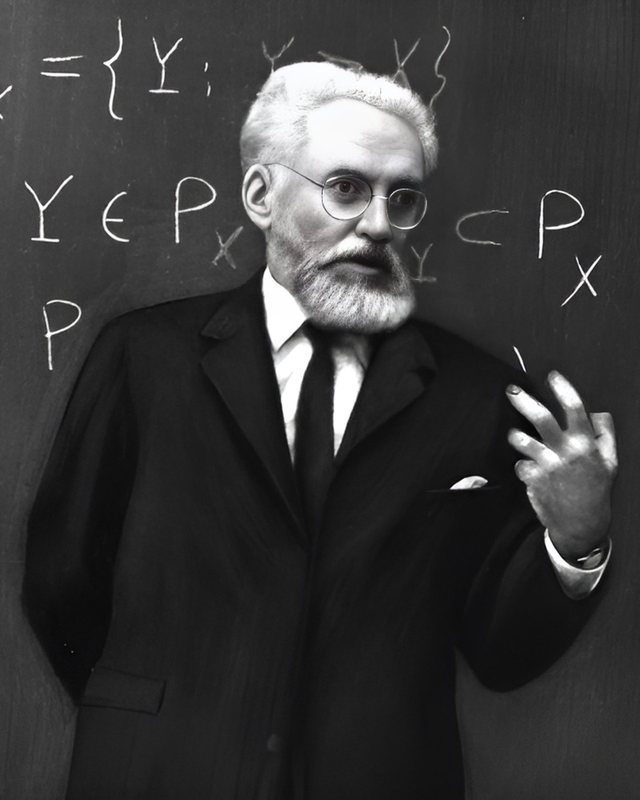
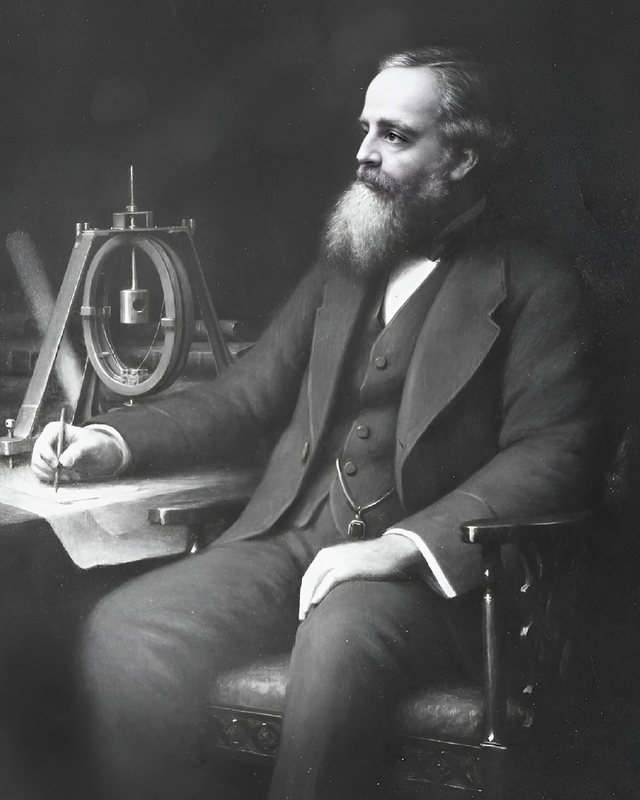
The circle is named in honour of Vladimir Arnold and Jerrold Marsden. Beside them it honours Aleksandr Danilovich Aleksandrov and James Clerk Maxwell, whose initials repeat, by a fitting coincidence, the A and the M of the emblem.
Their lives and worksOn this day
A sentence for each day from mathematics, the philosophy of science, the psychology of learning and of growth, literature and the practice of research, each given with its source.
The archive keeps every day’s quotation, with the whole collection.
“A mathematician, like a painter or a poet, is a maker of patterns. If his patterns are more permanent than theirs, it is because they are made with ideas.”
Elementary mathematics from an advanced standpoint.
After Felix Klein, Elementarmathematik vom höheren Standpunkte aus, 1908
Founded in 2020, AMMOC is a research and teaching circle for pre-college mathematicians. It treats the elementary mathematics of the olympiad and the pure mathematics of the university as a single subject, in the tradition of the mathematical circles of Eastern Europe, and asks of its pupils what mathematics asks of everyone: proof.
It is small by design. Seminars meet online in groups of three to nine, and the cohort never exceeds twenty-four pupils.
The five letters
Each letter of the name stands for one of the five commitments on which the circle rests. Together they say what AMMOC is more exactly than any summary could.
Attrition
The door is open; the room is deep.
The circle sets no entrance examination. Its door stands open from grade VII, the age at which a mind first learns that a statement can be proved, and not merely checked; but the room within is deep, for everything in it is proved and constructed from first principles. POETIC, the first of the circle’s books, now in preparation as the prequel to MOTIF, proves every result it states from a few foundations declared at the outset, and where it cannot, says so. Selection takes place inside, over years, and weighs not what a pupil already knows but the rate at which they adapt and the endurance they bring to difficulty. Attrition, from the Latin for a rubbing away, is the work of friction: against hard problems, the inessential wears away. What survives is attraction proven: the attachment to discovery and to critical thought that, with Arnold and Marsden, we hold early instruction to fasten, and that the circles of Moscow and Leningrad showed can bring a young mind to maturity before university. What draws a pupil here should be the subject itself; nothing else lasts.
Mathematics
The sprint keeps the marathon honest; the marathon keeps the sprint from becoming a bag of tricks.
Mathematics is pursued here at two tempos at once. The sprint is the olympiad problem, in the curriculum of the International Mathematical Olympiad: a closed question, a few hours, and nothing to lean on but ingenuity. The marathon is the undergraduate curriculum, read slowly, where one idea may take a term to understand and a year to use well. Each disciplines the other. They are one subject: the theorem behind an olympiad solution is proved as the university would prove it, and the theory of the university is carried back to the contest problem. Both are taught in the manner that Nikolai Konstantinov devised for the Moscow mathematical schools of the 1960s: a subject is set out as a sequence of definitions and problems, and the pupils, guided through every difficulty, come in the end to prove its theorems themselves. Nothing is taken as obvious, for, as a teacher in those schools used to say, ‘being obvious means easy to prove’. Competitions are kept in their place, as a barometer of how a young mind is thinking and a stage on which ability may be shown, but never as the destination. We teach mathematics as an intellectual art and a necessity of thought; distinctions, when they come, are its by-products.
Mentorship
A thesis is not a prize but a passage.
Mentorship here is apprenticeship in the older sense: a pupil works beside a mathematician until the manner of working becomes their own. The apprenticeship takes in every part of a pupil’s academic life, the choice of university and of subject among them. Its daily form is the one Konstantinov observed in his classes: when a pupil explains a proof to the teacher, and each tries to follow the other’s thinking, there arises ‘an entirely new level of mutual understanding’ between them, which lecturing does not create. Senior pupils follow directed reading drawn from the core and elective courses of research universities in North America, Europe and the former Soviet Union, and write expository theses on what they have read. At the close of their studies each thesis is examined orally, in some twenty to twenty-five meetings, by the director and by mathematicians from outside the circle. What is examined is not a performance but an understanding: whether the pupil can stand behind every line of the thesis, in their own voice. Nor does mentorship stop at what is already known: in the circle’s research seminars the pupils’ questions meet those of current mathematics, as when, in September 2026, a proof that every vector space has a basis led to the question of what that theorem costs. So the circle bridges the rigorous ingenuity of the olympiad and the professional study of theoretical mathematics.
Online
One blackboard, six continents, a single standard.
AMMOC works wholly online, and by choice. It was conceived in reflection on a complaint that university mathematicians often make of their entering students, a complaint less about how much they have covered than about how they think. The answer was to hold every pupil, wherever they live, to the standard of proof and of academic vision kept by the best circles of North America and Eastern Europe. Its seminars, of three to nine, have gathered pupils from more than twenty countries on six continents; senior pupils cover the theoretical mathematics of the first three undergraduate years, together with its use in contests. The Eastern European tradition has taught at a distance before: in 1964 Israel Gelfand founded the All-Union Correspondence Mathematical School at Moscow University, from which, by his own count, more than seventy thousand pupils graduated. The circle keeps up such a correspondence at the pace of the seminar itself: every few minutes pupils send photographs of their working, and the director reads each and returns a question or a direction rather than the solution. The medium changes nothing essential: a proof is written, questioned and rewritten, line by line, until it is right. The design reaches beyond the cohort: the circle publishes its courseware for young mathematicians everywhere, whether or not they study in it.
Creation
Ability is not measured here. We create it, and we continually advance it.
Every theorem, problem and definition begins with the pupil’s own attempt. Classical results are rediscovered under guidance before they are read, so that each proof first exists as a question the pupil has asked. Three capacities are formed in this way: the mathematization of thought; ingenuity; and cognitive endurance, the power to remain with a hard problem for days and to return to it after every failure. None of them can be tested into existence. They grow slowly, in close and demanding company, and when they consolidate they bring a particular happiness, and a first, sober apprehension of the scientific life ahead. In time the attempts become contributions of the pupils’ own: a counterexample, found while still at school, to an exercise in a standard text of analysis; original work by pupils printed in Crux Mathematicorum; theses examined by mathematicians from outside the circle.
The circle in figures
From the statement of the circle’s purpose“The circle exists to form young mathematicians. It seeks out pupils in the middle and high-school years, grounds them in proof, and leads the ablest of them, through directed reading and an expository thesis, to the threshold of research.”
One subject
There is no school mathematics and then real mathematics. There is one subject, and if you teach it honestly, the frontier is never far away.
Those who inspire us
The circle is named in honour of Vladimir Arnold and Jerrold Marsden. Beside them it honours Aleksandr Danilovich Aleksandrov and James Clerk Maxwell, whose initials repeat, by a fitting coincidence, the A and the M of the emblem.

On this day
“A mathematician, like a painter or a poet, is a maker of patterns. If his patterns are more permanent than theirs, it is because they are made with ideas.”
The archive keeps every day’s quotation, with the whole collection.